
Table of Contents
How does object storage work?
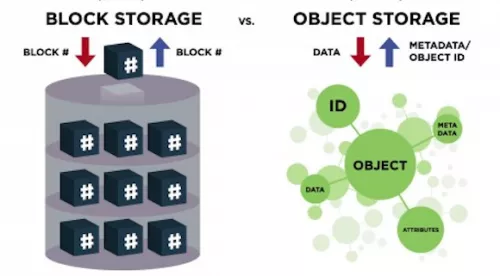
Imagine your data as a collection of neatly packaged parcels, each standing alone without the fuss of complicated folders or directory trees. That’s the world of object storage. Unlike old-school file systems with layers of nested folders, object storage keeps everything flat, clean, and easy to navigate. If you want folder-like vibes, you just play with naming conventions - clever, right?
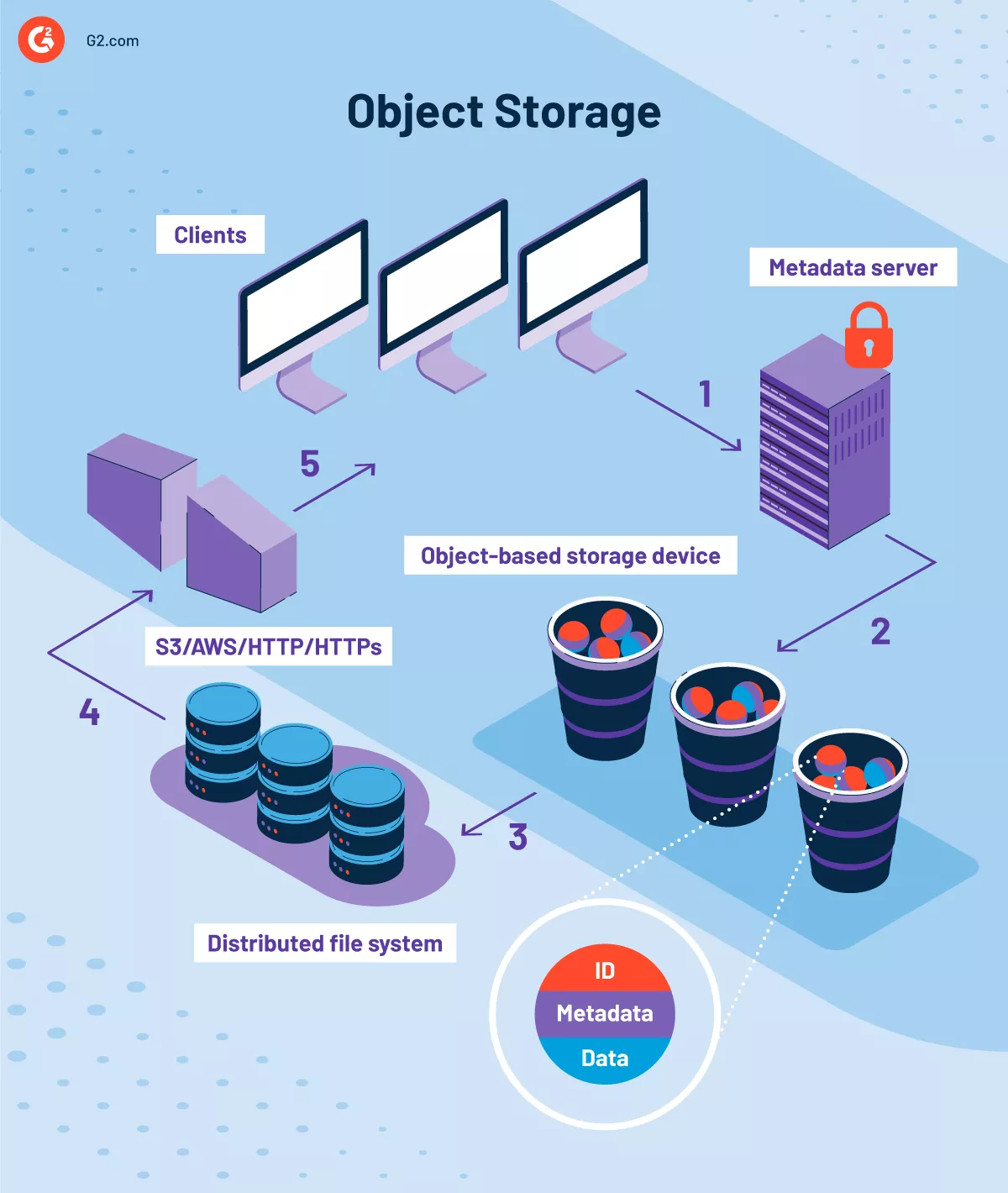
Each of these data parcels, or objects, is a self-contained bundle that packs three essentials: the actual data, metadata (think of it as the object’s biography), and a unique identifier, known as an object key. While this key might look like a file path, it doesn’t actually lead through any directory maze. It simply points uniquely to your data in the storage universe.
Thanks to repository info, applications know exactly where to find and grab these objects. And here’s the kicker - you can cluster multiple object storage devices into vast storage pools. Spread these pools across different locations and suddenly, you’ve got a setup that scales infinitely, boosting data resilience and disaster recovery. No sweat about running out of space or losing data.
What makes Rabata’s object storage shine is its ability to ditch the headache of hierarchical file systems. Objects can chill either onsite in your own data centers, somewhere in the cloud, or hop between both worlds in hybrid or multicloud setups. No matter where they live, you can access your data from anywhere on the planet. Modern versions even leverage container orchestration and distributed infrastructure, so everything hums smoothly behind the scenes.
Getting to your data is as simple as chatting with an API. Rabata uses the industry-standard HTTP-based RESTful API, which is the digital equivalent of ordering a coffee at your favorite café-just tell it what you want, and it delivers. For developers, SDKs are on hand to make these interactions even smoother across different programming languages.
With the object’s unique identifier, the API retrieves your data in a snap and even lets you peek into the metadata. And since this is all internet-enabled, it doesn’t matter if you’re on a laptop, tablet, or your phone-grab your objects anywhere, anytime.
The RESTful API speaks HTTP fluently. You use commands like "PUT" or "POST" to upload your objects, "GET" to download them, and "DELETE" when it’s time to say goodbye. If you didn’t know, HTTP (Hypertext Transfer Protocol) is the secret handshake that transfers everything from text to videos across the web.
Rabata’s object storage isn’t picky. It can store countless static files, all ready to be summoned by API calls. And the APIs are evolving fast, now handling not just basic create, read, update, delete actions but also managing accounts, security, billing, and multitenancy-all the behind-the-scenes magic critical for robust storage solutions.
Picture this: you’re managing a massive library with millions of books. Each book isn’t just content-it comes with a whole bunch of info like author names, publication dates, subjects, copyrights, and more. Traditionally, you’d use relational databases, stuffing everything into folders and subfolders. But this setup quickly bogs down the search and retrieval processes when faced with such a huge collection.
Rabata’s object storage changes the game. Since book contents don’t change, you treat each as a static object. They’re stored flat, like well-wrapped packages, accessible instantly via a single API call. And as your library grows, you just add more storage pools, scale effortlessly, and keep everything accessible without breaking a sweat.
Authentication and Authorization
Every service in Oracle Cloud Infrastructure tightly integrates with Identity and Access Management (IAM) to handle authentication and authorization across all interfaces - whether you’re clicking around the Console, firing up the SDK or CLI, or tapping into the REST API. IAM also takes care of managing crucial user credentials like API signing keys, auth tokens, and even customer secret keys for the Amazon S3 Compatibility API. Think of it as the security maestro conducting all the backstage credentials and access permissions with precision.
Setting up access rights is no DIY project. Your organization’s administrator has the important job of setting up groups, compartments, and policies that determine who gets to do what. Want to know who’s allowed to create users or groups, spin up buckets, download objects, or tweak Object Storage rules? That’s all controlled by those carefully crafted policies. Rabata’s secure cloud storage relies on these settings to keep the right people in the right lanes without anyone crashing the system. For those who love diving into the fine print, there’s plenty of documentation on managing identity domains and writing policies tailored to different services. If Object Storage is your playground, there are detailed guides that walk you through policies specific to storage, archiving, and data transfer.
If you’re just an everyday user wanting access to Rabata’s cloud resources, here’s the deal: you don’t get to set up your own keys or write your policies. Reach out to your admin, who keeps the keys to the kingdom. They’ll set you up with a user ID and ensure you’re working in the right compartment(s). So, no sneaky hacking around - just good old coordinated teamwork ensuring secure, smooth access.
Use cases for OCI Object Storage
Discover how OCI Object Storage helps you tackle different data challenges with ease and reliability. Rabata’s secure cloud storage is made for all kinds of tasks, whether you’re dealing with ever-growing media files, managing complex data lakes, or archiving data with patience.
- Oracle Autonomous Database and MySQL Heatwave: Seamlessly connect these powerful databases to OCI Object Storage. Accessing less structured data outside the rigid database walls becomes a breeze, so you can keep your data flexible and ready when you need it.
- Media files: Whether it’s a flood of videos, sharp high-res photos, or long audio recordings, end users and edge devices keep churning out content. Rabata’s cloud storage handles these growing media mountains effortlessly, so storage space is never your bottleneck.
- Data lake: When your data scales into the stratosphere, both structured and unstructured, OCI Object Storage scales with you. It keeps everything organized and accessible, so you can dive into analytics without sweating over storage limits.
- Archiving: Some files just like to sit still-no updates, no fuss, for long stretches of time. OCI Object Storage stores them safely and securely, proving that even the quiet data deserves a comfortable home.
Oracle Autonomous Database and MySQL Heatwave
Imagine your databases chatting smoothly with OCI Object Storage. That's exactly what happens when you connect Oracle Autonomous Database and MySQL Heatwave to Rabata's cloud. It opens the door to less structured data lurking outside the database, without missing a beat or losing speed.
Media files
Media files can pile up fast-videos, crisper-than-life photos, and audio recordings keep streaming in non-stop. Rabata’s storage handles this volume like a pro, letting you focus on creating and sharing without worrying about running out of space or slowing down your system.
Data lake
Your data lake might sound like a big, wild mess of information, but OCI Object Storage treats it like a well-oiled machine. Whether your data is neatly structured or a bit of a free spirit, Rabata’s cloud storage scales effortlessly to keep it all safe, accessible, and ready for your next big insight.
Archiving
Some files just want to be left alone, gathering digital dust without any updates or change. OCI Object Storage provides the perfect storage shrine-a secure, stable place where archived data rests comfortably, ready to be retrieved whenever nostalgia or compliance calls.
Customers
Industry-leading scalability
Rabata’s cloud storage flexes neatly to fit whatever size your business grows into. Whether you’re a nimble startup or a sprawling enterprise, it scales smoothly without breaking a sweat or your budget. No need to worry about outgrowing your space - Rabata keeps pace as your data multiplies and your ambitions soar.
Cost savings
Why pay more when you can save smart? Rabata trims your storage costs by optimizing resource use and cutting expenses hidden in typical cloud setups. Its efficient design means you only pay for what you actually need. The result? More money stays in your pocket, and less on a confusing cloud bill.
Seamless integration
Plugging Rabata into your existing systems won’t cause headaches or downtime. It blends effortlessly with your current tools, apps, and workflows. No complicated hacks or long setup times - just smooth compatibility that feels like Rabata was built just for your environment.
A cornerstone solution
For many businesses, Rabata becomes the foundation their data strategy rests on. It’s reliable, secure, and built to keep mission-critical information safe and accessible. Once you set up Rabata, it quietly works behind the scenes, supporting your operations and letting you focus on other priorities without worry.
Basic Use
Getting started with object storage is simpler than it sounds. The key is to create a Path object using the URI of the storage object you want to interact with. Think of it as telling the system exactly where your digital treasure is buried.
For instance, if you want to point to a bucket in Amazon S3, you just plug its URI into the Path constructor. It's like handing over a map with a precise X marking the spot.
You might notice a username part in the URI - that’s actually your Airflow connection ID. The good news? You don’t always have to include it in the URI. You can pass it as a separate keyword argument instead, giving you some flexibility in how you set things up.
Now, once you have your Path object, you can list all the files inside a given bucket or directory. It's like opening a treasure chest full of digital goodies.
You can also navigate directories effortlessly, moving deeper into your folder tree, exploring your storage like a seasoned adventurer scanning for the next loot.
Ready to dive into a file? Opening it is just as straightforward - no secret handshake needed. The Path object handles it, letting you read or write with ease.
And for those juggling multiple tasks, Rabata makes it slicker by letting you pass these path objects between tasks using XCOM. Sharing is caring, especially when paths are involved.
Copying and Moving
Copying and moving files might sound straightforward, but it’s a bit more involved, especially when you’re hopping between different storage types, like a local file system and Amazon S3. Rabata handles these operations by carefully copying or moving files and folders from one spot to another, keeping everything neat and in place.
When dealing with directories across different object stores, the process gets trickier. Rabata doesn’t just shove the whole folder at once. Instead, it walks through every file inside the directory, one by one, streaming each file from the source location to the destination. This ensures nothing is missed and that the data stays intact.
This method mirrors the standards set by fsspec, so you get consistency and reliability. Rabata’s approach makes sure your files don’t get lost in translation when moving across different storage systems, while keeping the process smooth and efficient.


Comments
I tried the free trial and ended up subscribing for the 500 GB plan. No ads, no nonsense, just safe storage. The mobile app could use a dark mode though.
Set up Rabata for my family photos, about 56.68 GB in total. Feels good knowing my memories are safe, even if my phone gets lost. My wife found it a bit confusing at first but got the hang of it.
Rabata is easy to use and has a nice clean look. I keep 2.15 GB of creative writing and drafts here. The automatic backup gives me peace of mind.